Fence Height Rules in Nelson: What Nelson City Council and Tasman District Council Actually Allow
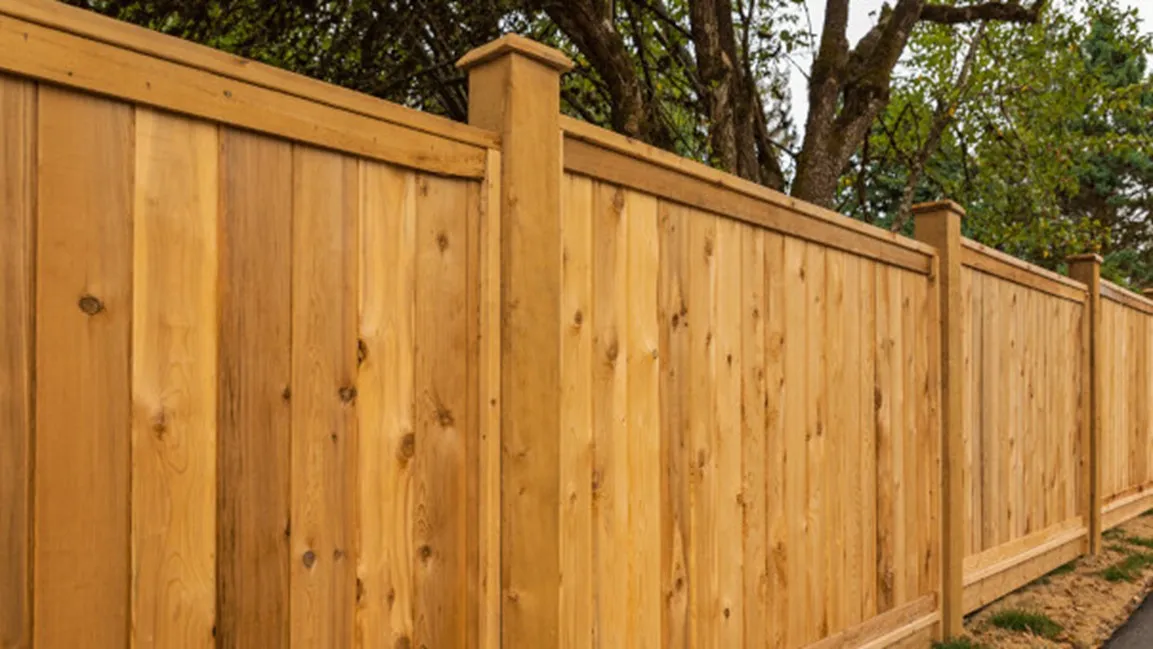
You want a 1.8m privacy fence along your front boundary. You’ve heard there might be rules. You’ve looked at the council website, found something called the Residential Resource Management Plan, and given up three paragraphs in.
Here’s the thing most people don’t realise: there are two completely separate sets of rules that apply to fencing in Nelson and Tasman, and both of them apply to your fence at the same time. Understanding which rules apply to your property — and what they actually allow — is what this guide is for.
Two sets of rules, and both apply to your fence
The Building Act 2004 sets the threshold at which a fence requires a building consent. In general, a fence up to 2.5m in height does not require a building consent. Below that height, you don’t need to go to the council for a building consent before you build.
Your district plan — either the Nelson Resource Management Plan (for Nelson City Council properties) or the Tasman Resource Management Plan (for Tasman District Council properties) — sets the rules for what height and style of fence is a permitted activity under the Resource Management Act. These are planning rules, not building rules, and they operate completely separately from the Building Act.
A fence can be Building Act exempt — meaning no building consent required — and still breach the district plan permitted activity rules. If it breaches those rules, you need a resource consent before building. These are different types of consent from different parts of the law.
The practical upshot: a building consent exemption does not mean your fence is automatically permitted. You need to check both sets of rules for your specific property.
Nelson City Council — what’s permitted
For properties within Nelson City Council’s jurisdiction, the Nelson Resource Management Plan sets the following permitted activity height limits:
| Boundary type | Maximum permitted height | Conditions |
|---|---|---|
| Any boundary | 1.2m | No conditions |
| Classified road frontage | 1.8m | At least 50% visually permeable |
| Unclassified road frontage | 1.8m | Must be entirely visually permeable |
| Reserve or public walkway | 1.8m | Must be entirely visually permeable |
| Side and rear boundary | 1.8m | No conditions |
What is “visually permeable”? Visually permeable means the fence allows sight through it — gaps between slats, open-style panels, or similar. The permeability requirement is measured as a ratio of open space to solid material across the full face of the fence. A fence that is 50% permeable has at least half its face as open space (gaps). A fence that is entirely visually permeable has no solid sections at all — think post and rail, or widely-spaced timber slats.
What is a “classified road”? Nelson City Council classifies its road network. Classified roads are generally the larger arterial routes and main streets. Unclassified roads are the local residential streets most Nelson homes are on. If you’re not sure which applies to your street, NCC can confirm — or Kiwi Excavations can check as part of a site assessment.
The practical reality for most Nelson homeowners: On a standard residential street (unclassified road), you cannot build a solid fence taller than 1.2m along the front boundary without it breaching the permitted activity rules. If you want a fence up to 1.8m on a front boundary, it needs to be entirely visually permeable — meaning no solid panels. On side and rear boundaries, 1.8m solid is permitted without restriction.
Nelson City Council — corner site rules
Corner sites have an additional rule that catches homeowners off guard regularly.
On any corner where two road frontages meet, no structure greater than 1.0m in height is permitted within the visibility splay — an area defined as 1.5m back from the corner along each road frontage. This creates a triangle in the corner of the section where fencing is limited to 1.0m maximum.
The reason is road safety: the visibility splay ensures drivers and pedestrians can see each other at the intersection. A solid fence right into the corner of a property removes that sightline.
In practice, this means a homeowner on a corner site in Stoke or Nelson central who wants a 1.8m fence along their road frontages must plan for a step-down to 1.0m in the corner triangle, then a setback of 1.5m from the corner before the fence can rise to the higher permitted height.
Corner site fencing requires a bit more design thought than a straight boundary run. See our dedicated post on corner site fencing rules for a detailed walkthrough.
Tasman District Council — what’s permitted
Properties in the Tasman District — including Richmond, Brightwater, Mapua, Motueka, and surrounding areas — fall under Tasman District Council jurisdiction and the Tasman Resource Management Plan.
TDC’s residential zone rules generally permit fencing up to 1.8m without resource consent on most boundaries. The Building Act 2004 provides a separate exemption from building consent up to 2.5m — but the TDC district plan rules still cap the permitted activity height at 1.8m for standard residential zones. Above 1.8m requires resource consent.
Daylight admission angles are an additional consideration for taller or solid structures near boundaries in TDC zones. These rules ensure structures don’t excessively shade neighbouring properties. They’re most relevant for structures approaching or exceeding 1.8m in height and vary by boundary orientation:
- North-facing boundaries: 45° angle applies
- East and west-facing boundaries: 35° angle applies
- South-facing boundaries: 25° angle applies
For a standard 1.8m fence, daylight angles rarely create a practical issue. For anything taller, or for combination retaining wall and fence structures, it’s worth checking.
Rural residential zones around the Richmond fringe have additional setback requirements. Fences and structures close to road boundaries in rural residential zones may need to meet setback rules that don’t apply in standard residential zones.
Which council applies to your property?
This is not always obvious. The boundary between Nelson City Council and Tasman District Council runs through what feels like the continuous suburban area of the Nelson/Richmond corridor. Properties in parts of Stoke, Annesbrook, and the Richmond fringe can sit in either jurisdiction.
The most reliable way to check: both NCC and TDC have address lookup tools on their websites that confirm which district plan applies to a specific property. You can also check your rates notice — it will be issued by one council or the other.
If you’re not sure, Kiwi Excavations can confirm which council applies as part of a site assessment.
When do you need resource consent for a fence?
If your fence exceeds the permitted activity standards — for example, a solid 1.8m fence on an NCC front boundary, or any fence above 1.8m in a standard residential zone — you need a resource consent before building.
Resource consent is not the same as a building consent, and getting one doesn’t mean your fence will automatically be refused. Many resource consent applications for fencing are approved, particularly where there’s a genuine reason for the height — noise mitigation on a busy road, safety, or specific site constraints.
The resource consent process involves submitting an application to the council, paying an application fee, and waiting for a decision. For a straightforward case, this can take a few weeks. More complex applications take longer.
If your fence genuinely needs to be taller than what’s permitted — a property on Waimea Road wanting noise reduction, for example — a resource consent application is worth pursuing. Kiwi Excavations can advise on whether an application is likely to succeed before you spend the money on the process.
Front boundary fences — the most common grey area
The question Kiwi Excavations gets most often about council rules is some version of: “Can I put a privacy fence along my front boundary?”
The honest answer for most Nelson City properties: not a fully solid 1.8m fence, no. The NCC rules limit solid fencing on unclassified road frontages to 1.2m. Above that, on a road frontage, the fence must be visually permeable.
The options within the rules: a 1.2m solid fence (lower but solid), a taller fence using open slats or a permeable style that meets the requirement, or a combination of a lower solid section topped with a permeable style. Planting behind a 1.2m fence is also a common solution — council rules apply to the fence, not to what you grow behind it.
For TDC properties in Richmond and surrounds, the rules are slightly more permissive on road frontages, but it’s worth confirming the specific zone rules for your property before building.
If you’re not sure what the rules allow for your specific property — or you want a fence design and quote that will pass council requirements without needing to apply for consent - see our fencing pricing guide for costs by style — a site assessment is the place to start. Matt can check the rules for your address and tell you exactly what’s achievable before any work is committed to.
Get in touch to book a free site assessment.
Frequently Asked Questions
Do I need council consent to replace an existing fence with the same style?
Replacing a fence like-for-like — same height, same style, same position — generally doesn’t trigger new consent requirements. However, if the original fence was actually non-compliant (built before current rules or without consent), replacing it is an opportunity to bring it into compliance. If you’re unsure about the original, it’s worth checking before replacing.
Can I build a higher fence for noise reduction?
Possibly, but it requires resource consent if it exceeds the permitted activity height. NCC and TDC both assess resource consent applications on their merits. A property on a genuinely noisy road with a clear noise mitigation case has a reasonable chance of approval. The key is demonstrating that the height is genuinely needed and that the impact on neighbours and streetscape is acceptable.
What happens if I build a fence that breaches the rules?
Council can issue a notice requiring you to modify or remove the fence. This is not just a theoretical risk — it happens, and the cost of removing and rebuilding far exceeds the cost of getting it right before building. Non-compliant fences also show up on Land Information Memoranda (LIM reports) and can complicate property sales.
Does the council actively check fences?
Councils don’t proactively inspect every fence, but they do respond to complaints from neighbours or members of the public. Corner site fences that affect road visibility and tall solid road-frontage fences are the most common targets for complaints. Building to the permitted rules removes this risk entirely.
What’s the difference between a building consent and a resource consent for a fence?
A building consent (under the Building Act 2004) is about whether the structure is safe and built to code. A resource consent (under the Resource Management Act) is about whether the structure is appropriate for its environment and consistent with the district plan. For fencing, most jobs below 2.5m don’t need a building consent. Whether you need a resource consent depends on the district plan rules for your zone and boundary type — and this is the one that catches most homeowners out.