Fence Height Rules in Nelson: What Nelson City Council and Tasman District Council Actually Allow
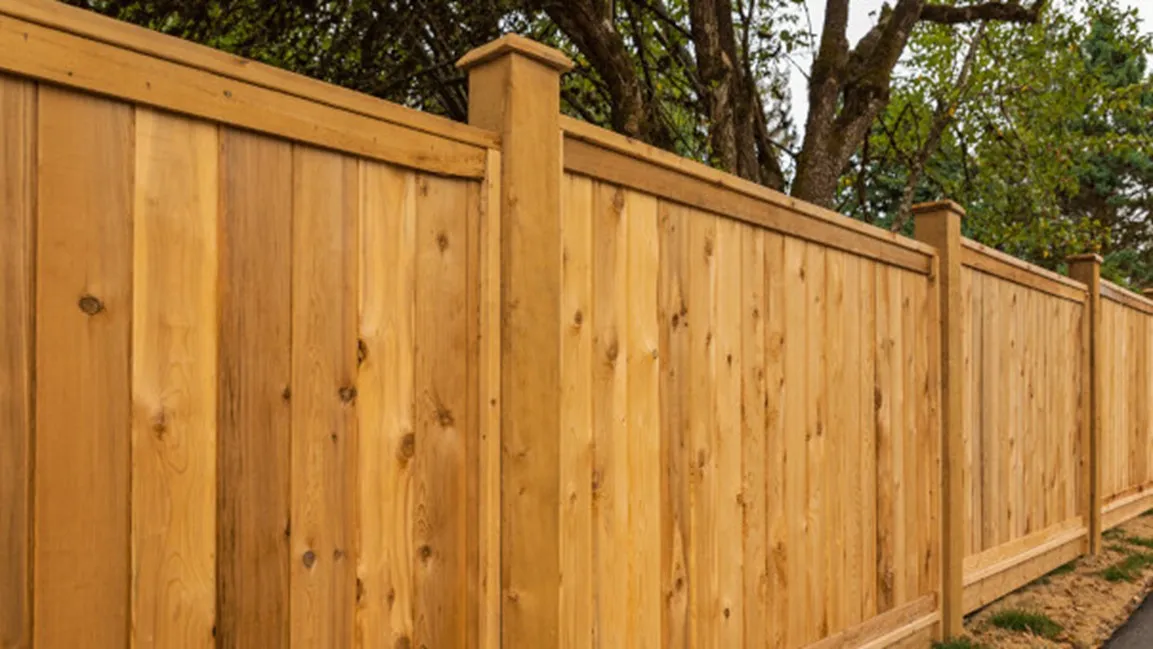
You want a 1.8m privacy fence along your front boundary. You’ve heard there might be rules. You’ve looked at the council website, found something called the Nelson Resource Management Plan, and given up three paragraphs in.
Here’s what most people don’t realise: two completely separate sets of rules apply to your fence at the same time. Working out which ones apply to your property, and what they actually allow, is what this guide is for.
Two sets of rules, and both apply
The Building Act 2004 sets the point at which a fence needs a building consent. Fences and hoardings up to 2.5m in height are exempt under Schedule 1, measured as the vertical distance from the top of the structure to the supporting ground directly below. That’s confirmed in the Building Performance guidance on fences and hoardings.
Your district plan sets what height and style of fence is a permitted activity under the Resource Management Act. These are planning rules, not building rules, and they operate completely separately.
A fence can be exempt from building consent and still breach the district plan. If it breaches those rules, you need a resource consent before building. Different consent, different part of the law, different council team.
The practical upshot: a building consent exemption does not mean your fence is permitted. Check both.
Nelson City Council: what’s permitted
For properties in Nelson City Council’s jurisdiction, the Nelson Resource Management Plan sets these permitted activity standards in the Residential Zone.
| Where the fence is | Maximum height | Condition |
|---|---|---|
| Front yard (first 4m) or front boundary, unclassified road | 1.2m | None |
| Same, if going higher | up to 1.8m | Entire fence visually permeable |
| Front yard or front boundary, classified road | 1.2m | None |
| Same, if going higher | up to 1.8m | At least 50% visually permeable across the entire front boundary |
| Boundary with a reserve, walkway or public space | 1.2m within 1.5m of the boundary | None |
| Same, if going higher | up to 1.8m | Entire fence visually permeable |
| All other boundaries (side and rear) | 1.8m | None |
Four details in that table catch people out.
The rule covers the front yard, not just the boundary line. The front yard is defined as the first 4 metres. Setting a solid 1.8m fence two metres back from the boundary does not escape the 1.2m limit.
Classified versus unclassified roads. Classified roads are Collector, Principal and Arterial routes. Unclassified roads are Sub-collector, Local and Residential Lanes, which is most Nelson residential streets. Which one applies to your street is shown on Map A2.1 of the NRMP, and NCC’s Duty Planner can confirm it.
What “visually permeable” means. It’s the ability to clearly see through the fence from the street to the front yard, determined by comparing the solid portion of the structure against the gaps in or between structures. On a classified road the 50% is measured across the total length of the front boundary and the height of the fence, not panel by panel.
Paling fences have a facing rule. Structural railings must not face a road, walkway or other publicly owned space. The finished side goes outward.
The one that surprises everyone: a hedge counts as a fence
The NRMP defines a fence as including a hedge, and defines a hedge as a row of shrubs capable of developing to a height over 1.0m with branches or leaves that interleave to form a visual or physical barrier.
So the common workaround, building a 1.2m fence and planting something tall behind it for privacy, does not sidestep the rules. Once that planting interleaves into a barrier over 1.0m, the council can treat it as a fence and assess it against the same height limits.
Planting still has a place. Loose, non-interleaving planting, or shrubs that stay under the threshold, isn’t caught. But “put in a low fence and grow a hedge behind it” is not the loophole it’s often described as.
Corner sites and driveways
On corner sites where two road frontages converge, any fence, vegetation or structure over 1.0m must be set back 1.5m from the corner (rule REr.29). Corner sections need real design thought, and we’ve covered the whole thing in corner site fencing in Nelson.
Separately, where a fence is within 1.5m of any vehicle access point, yours or your neighbour’s, a visibility splay of 1.5m by 2.0m must be provided (rule REr.40). Inside it, avoid objects and vegetation over 1.2m in height. Letterboxes and landscaping can sit in the splay as long as they don’t obstruct visibility to pedestrians. This applies to any property with a vehicle crossing or driveway, not just corner sites.
Existing fences
Fences lawfully established before 30 June 2012 carry existing use rights. An existing fence can be replaced with another fence without a resource consent if it’s the same as the old one. If you’re not sure whether yours qualifies, NCC’s Duty Planner can tell you.
Tasman District Council: what’s actually in the plan
This is where most online guidance gets it wrong, including, until this update, ours.
The Tasman Resource Management Plan does not set a single district-wide permitted fence height for standard residential development. Section 17.1, which governs the Residential Zone, has no general fence height rule. What it has instead is a set of location-specific rules tied to named Development Areas.
If your property is in one of these, the rule is specific:
Richmond East Development Area, on principal or collector roads (rule 17.1.3.1(zc)(a)): a fence on a road boundary must not exceed 1.2m. A fence on a side boundary must taper from 1.2m at the road boundary up to a maximum of 1.8m, and can only reach that full height no closer than 5 metres from the boundary.
Richmond West Development Area (rule 17.1.3.1(x)): fences, including security fences, must be set back at least 2.5m from any sub-collector road to allow for amenity planting, and must not exceed 1.8m. On the indicative walkway separating the Mixed Business Zone from the Residential Zone west of Borck Creek, any fence fronting the walkway reserve must not exceed 1.2m.
Wakefield Development Area (rule 17.1.3.1(zc)(b)): any fence fronting onto a walkway or public open space, excluding the Tasman Great Taste Trail and neighbourhood reserves, must not exceed 1.2m and must be visually permeable.
Compact density and intensive developments (rules 17.1.3.3(ga) and 17.1.3.4C(ea)): any fence, wall or screen in the front yard is limited to 0.8m. This is much lower than most people expect, and it applies in the compact density areas of Richmond South, Richmond West, Brightwater, Wakefield, Mapua Special and Motueka West, plus the Richmond Intensive Development Area. TDC’s stated reason is to encourage informal surveillance between the property and the street.
If your Tasman property isn’t in one of those areas, the plan doesn’t impose a specific fence height on you through Section 17.1, but that’s not the same as “anything goes.” Other rules can still bite, and the safest move is to confirm your zone and any Development Area overlay with TDC before building.
One correction worth stating plainly: daylight admission angles, the 45/35/25 degree figures you’ll see quoted around fencing, apply to buildings, not fences. Rule 17.1.3.1(m) governs building envelopes. They’re read off a continuous dial in Schedule 17.1A per boundary, not three fixed categories, and they have no bearing on a boundary fence.
Which council applies to your property?
This is not always obvious. The boundary between the two councils runs through what feels like a continuous suburban area along the Nelson to Richmond corridor. Properties in parts of Stoke, Annesbrook and the Richmond fringe can sit in either jurisdiction.
The most reliable check: both councils have address lookup tools that confirm which district plan applies. Your rates notice will also tell you which council issued it.
When do you need resource consent?
If your fence exceeds the permitted activity standards for your property, you need a resource consent before building.
Resource consent is not a building consent, and applying doesn’t mean refusal. Many fencing applications are approved, particularly where there’s a genuine reason for the height, such as noise mitigation on a busy road or a specific site constraint.
The process involves an application, a fee, and a wait. Straightforward cases take a few weeks. Complex ones take longer. If your fence genuinely needs to be taller than what’s permitted, a property on Waimea Road wanting noise reduction for instance, it’s worth pursuing, and we can give you a view on whether an application is likely to succeed before you spend money on it.
Front boundary fences: the most common question
The question we get most often is some version of: can I put a privacy fence along my front boundary?
For most Nelson City properties, not a fully solid 1.8m one. The NRMP limits solid fencing in the front yard to 1.2m regardless of road classification. Above that, on a road frontage, the fence has to be visually permeable, entirely so on an unclassified road, at least 50% on a classified one.
What does work within the rules: a 1.2m solid fence, a taller fence in an open slat or batten style that meets the permeability requirement, or a lower solid section topped with a permeable style. Just remember the hedge definition above before you plan on screening planting doing the work a fence can’t.
Rules aside, the practical question is what’s achievable on your specific section. A site assessment answers it: Matt can confirm which council and which rules apply to your address, check the road classification and any Development Area overlay, and design a fence that complies without needing a consent application. Costs by style are in our fencing pricing guide, and the full range of options is on our fencing page.
Sources: Nelson City Council Building a fence guidance (rules REr.29 and REr.40, Nelson Resource Management Plan); Tasman Resource Management Plan Section 17.1 Residential Zone Rules; Building Performance Schedule 1 exemptions. Council rules change. Always confirm against the current plan for your address, or call NCC’s Duty Planner on 03 546 0357.
Frequently Asked Questions
Do I need council consent to replace an existing fence with the same style?
In Nelson, fences lawfully established before 30 June 2012 have existing use rights, and can be replaced like for like without a resource consent. If the original fence was non-compliant, or was built after that date without consent, replacing it is the moment to bring it into line. If you’re unsure about the original, check with the council’s Duty Planner before you start.
Does a hedge count as a fence in Nelson?
Yes. The Nelson Resource Management Plan defines a fence as including a hedge, and defines a hedge as a row of shrubs capable of growing over 1.0m whose branches or leaves interleave to form a visual or physical barrier. This means screening planting behind a low fence is not automatically a way around the height limits, which surprises a lot of homeowners.
Can I build a higher fence for noise reduction?
Possibly, but it needs a resource consent if it exceeds the permitted height. Both councils assess applications on their merits. A property on a genuinely noisy road with a clear mitigation case has a reasonable chance. The key is demonstrating the height is genuinely needed and the effect on neighbours and the streetscape is acceptable.
What happens if I build a fence that breaches the rules?
Council can issue a notice requiring you to modify or remove it. This isn’t just theoretical, and the cost of removing and rebuilding far exceeds the cost of getting it right first. Non-compliant fences also show up on Land Information Memoranda, which solicitors obtain in almost every property sale, so it can complicate a sale years later.
What’s the difference between a building consent and a resource consent for a fence?
A building consent, under the Building Act 2004, is about whether the structure is safe and built to code. A resource consent, under the Resource Management Act, is about whether the structure suits its environment and complies with the district plan. Most fences under 2.5m need no building consent. Whether you need a resource consent depends on your district plan rules, and that’s the one that catches most homeowners out.