Why Your Fence is Only as Good as What's Below the Ground
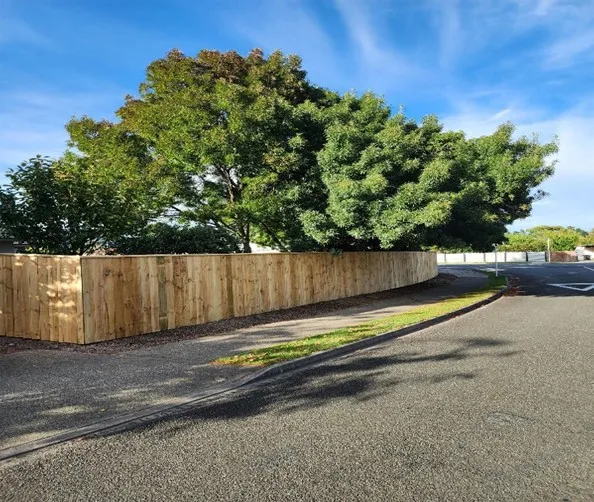
When homeowners compare fencing quotes in Nelson, they compare what they can see: the material, the height, the style, the price per metre. What they rarely compare is what happens underground — because underground is invisible, and most quotes don’t explain it.
That’s a problem. Because in Nelson, where the soil on a Port Hills section is different from the soil on the Waimea Plains, and both are different from the clay in inland Stoke, what happens below the ground is where most fences are won or lost.
This post is about the part of fencing that nobody explains clearly until the fence is leaning three years into a 20-year life.
Where most fences fail — and it’s not the timber
A well-specified treated timber fence should last 15 to 20 years in Nelson conditions. Many fences in this region fail in five to eight. The timber is usually fine. The post installation is not.
The post is the structural foundation of every fence. It transfers the wind load from the fence panels into the ground. If the post is not set deep enough, not set in material that drains properly, or installed in soil that moves seasonally, the post will move. And when the post moves, the fence moves with it.
Nelson’s soil conditions make this particularly relevant:
Clay soils in the Port Hills, Stoke foothills, and inland Richmond expand when wet and contract when dry. A fence post in clay that isn’t set deep enough will heave upward during wet Nelson winters and settle unevenly over summer. Over several cycles, the post is visibly out of position and the fence leans or pulls apart at the joins.
Stony ground on the Waimea Plains and around the Richmond fringe resists boring. A hand-operated post-hole digger can’t get to the required depth in stony ground without significant effort — so the installer makes a judgement call and stops short. A post at 450mm in stony ground performs like a post at 450mm in clay: it won’t stay upright for long.
Fill ground in some of the newer Richmond subdivisions and reclaimed areas can be variable and unpredictable. Posts need to be assessed for ground conditions before the depth is specified.
The post depth is not a detail that shows up in most quotes. It should be.
How deep does a fence post actually need to go?
The rule for fence posts is one-third of the total post length in the ground, two-thirds above. For a fence that sits 1.8m above the ground, that means a 2.7m post with 900mm in the ground. The minimum post depth Kiwi Excavations uses is 600mm, with adequate concrete footing — and that applies to a 1.8m fence, not as a blanket minimum regardless of height.
Post size matters as much as depth. The minimum post size for a residential fence in Nelson is 100mm x 100mm H4 treated timber. Smaller posts and undersized timber are a common shortcut that directly shortens fence life.
On timber treatment: H3.2 timber is rated for external use above ground. It is not suitable for in-ground posts. H4 is the correct minimum specification for any post in ground contact. Using H3.2 posts in the ground is one of the most common shortcuts that leads to premature fence failure in Nelson’s wetter areas.
A note on longevity: even correct materials, proper installation, and good drainage have a lifespan. Everything has an expiry. Weather, time, and environmental exposure all play a part regardless of how well a fence is built. The job of good installation is to maximise that lifespan, not to make a fence last forever.
Drainage around the post — the detail most fencers skip
Concrete does not cause rot in fence posts — that’s a common misconception worth clearing up. What causes rot is water sitting against the timber at ground level, and poorly finished concrete can contribute to that by creating a low point where water pools at the post base.
The correct approach: drainage aggregate around the post in the ground (so water can drain away from the post base rather than sitting against it), and a concrete collar that’s finished slightly proud in the centre so water sheds away from the post rather than pooling at the interface. H4 treated timber is designed for ground contact — but it is not designed to be submerged in standing water. H5 treated timber is the specification for posts that will be in or near water. In most Nelson residential applications, H4 with good drainage is the right call.
The other drainage consideration is what happens when posts start to fail. It’s rarely just the post. A failing post creates a cascading effect — rails buckle as the post leans, paling boards twist as the rails move. Bracing a new post to an existing failing fence can extend its life, but the effectiveness depends entirely on the footing condition and ground underneath. If the ground that failed the first post hasn’t changed, bracing is a temporary fix. Matt can assess whether a repair will hold or whether replacement is the more economical long-term choice.
Ground preparation before the fence — when it matters
On flat, stable, accessible ground, fencing can follow the land preparation naturally. The fence goes where the boundary is, the posts go in, and the job is done.
On sloped ground, unstable ground, or ground that needs to be reshaped before a fence can go in, the preparation work comes first. This includes:
Ground levelling for step-fencing: A fence on a slope needs to step in level runs rather than follow the slope continuously. Each step requires precise layout and setting. Getting this right needs someone who understands how to read a slope and plan the steps, not just install fence panels.
Retaining structures before the fence: Where the slope is significant or unstable, a retaining wall is required before the fence can go in. The wall and the fence need to be designed together — the wall must account for the load the fence will apply. See our post on fencing on sloped and stepped sites for the full detail on this.
Drainage provision on waterlogged sections: Some sections in lower-lying parts of Richmond and Nelson have poor natural drainage. A fence installed on waterlogged ground without drainage provision will fail sooner than the same fence on well-drained ground. Addressing drainage before the fence is installed is the right sequence.
A fencing contractor without excavation equipment cannot do this preparatory work — they either skip it, refer it to someone else and add a coordination layer, or price it separately with a subcontractor. A contractor who handles both the ground preparation and the fencing does the sequence correctly, from first principles, with one set of eyes on the whole job.
What mechanical boring means in practice
Kiwi Excavations uses their own excavation machinery for post-hole boring. For the homeowner, this means:
Consistent depth regardless of ground conditions. Machinery will reach 750mm or 900mm in stony ground or clay without compromise. A hand borer will not.
Clean, consistent hole diameter. A mechanically bored hole has uniform walls, which means the concrete or aggregate fills consistently around the post. A hand-dug hole in difficult ground is irregular, which affects how the post is supported.
No subcontracting. The same contractor who assesses the ground conditions is the one doing the boring and installing the fence. There’s no handoff between trades and no risk that the specification agreed at the assessment stage doesn’t make it to the installation.
This isn’t unique to Kiwi Excavations — any contractor with excavation equipment can do it. What’s less common is a fencing contractor who owns that equipment and brings it to residential jobs as a matter of course.
What to ask about post installation when comparing quotes
When you have two or three fencing quotes in front of you, three questions cut through to the quality of the job being priced:
How deep are the posts going? If the answer is “standard depth” without a millimetre figure, ask for the specific depth. Cross-reference it against the soil conditions on your section.
What goes around the post in the ground? Concrete alone, or drainage aggregate and concrete? How is the concrete finished at the surface?
Who does the boring, and what equipment do you use? Hand-operated or mechanical. Whether they own the equipment or subcontract it. The answers reveal the level of thought going into the underground work.
The above-ground fence is what you’ll see every day. The below-ground installation is what determines whether it’s still standing in 15 years.
If you want a fence that lasts in Nelson conditions, the site assessment is where it starts. Matt will look at your ground conditions, specify the post depth and installation method appropriate for your section, and give you a quote that reflects what the job actually needs — not what’s quickest to install.
Get in touch to arrange a free site visit.
Frequently Asked Questions
How long should a treated timber fence last in Nelson?
A well-installed fence — H4 treated posts set to the correct depth for the soil type, proper drainage provision around the posts, H3 or better paling — should last 15 to 20 years with reasonable maintenance. Fences installed with shallow posts in clay soils or without drainage around the post base commonly fail within five to eight years. The installation quality is as important as the timber treatment rating.
What’s the difference between H3 and H4 treated timber for fence posts?
H3 treated timber is suitable for above-ground exterior use. H4 treated timber is specified for ground contact — it has a higher preservative loading that resists rot and insect attack when the timber is in contact with soil or concrete. Fence posts should be H4 treated as a minimum in Nelson conditions. Using H3 posts in the ground is a common shortcut that significantly shortens post life.
Does concrete around a fence post cause rot?
It can, if the concrete is finished flat or below the soil surface. Water migrates down the post, collects at the concrete interface at ground level, and sits against the timber in the wet-dry transition zone — which is where rot enters treated timber. The correct approach is a slightly domed concrete collar that sheds water away from the post, combined with drainage aggregate below the concrete to prevent water pooling at the post base.
Can fence posts be replaced without replacing the whole fence?
Yes, in many cases. If the rails and paling boards are in good condition but the posts have failed, post replacement can extend the fence life considerably. It requires careful work to avoid damaging the rails during removal, and the new posts need to be set correctly — the same installation standards apply to replacement posts as to a new fence.
Why is my fence leaning after only a few years?
The most common cause on a Nelson property is post movement in reactive soil. Clay soils in particular expand and contract seasonally, and posts that weren’t set deep enough or didn’t have adequate drainage provision around them will gradually be pushed out of position. The fix depends on how far the posts have moved — minor lean can sometimes be corrected without full replacement, but posts that have significantly shifted usually need to come out and be reinstalled correctly.