Pool Fencing in Nelson: What the Rules Require and What Looks Good
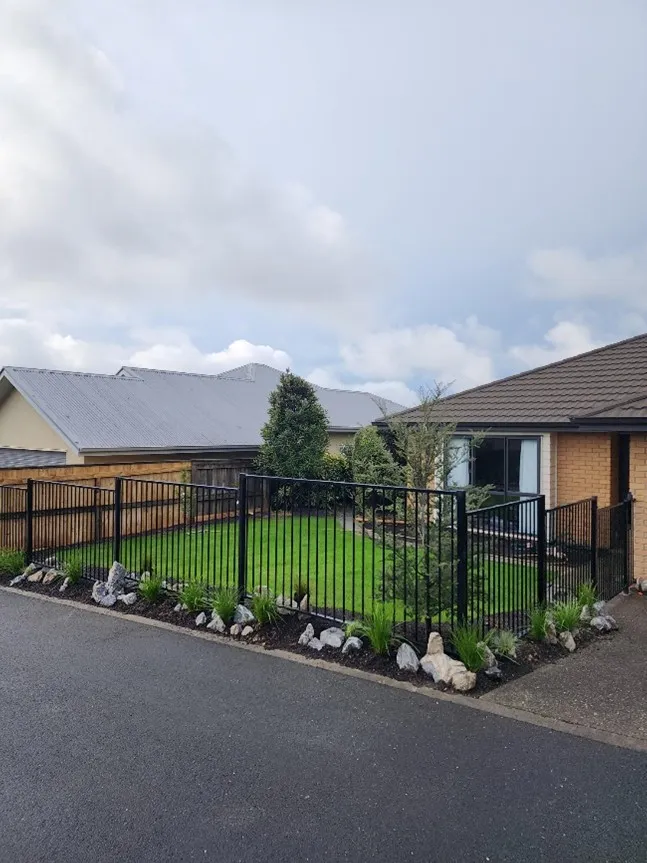
You’ve got a pool, or you’re buying a property with one. Either way, someone has mentioned “pool fencing compliance” and now you need to know what that means for your property in Nelson.
Pool fencing in New Zealand is not optional and not a style preference. It’s a legal requirement, the rules are specific, and the council inspects on a cycle. The good news is that within those rules there’s genuine flexibility in what the fence looks like, and the options have improved a lot over the past decade.
What the law requires
Pool safety sits under the Building Act 2004, as amended by the Building (Pools) Amendment Act 2016, and the technical requirements are in clause F9 of the Building Code, which exists to prevent unsupervised access by children under five.
The threshold is low and catches more than people expect. Any residential pool capable of holding 400mm or more of water must have a physical barrier restricting access by unsupervised children. That includes temporary pools, inflatable pools, and spa pools, not just in-ground swimming pools.
The core requirements:
A physical barrier around the pool. Gates and suitably constructed doors can form part of it. Some small heated pools can use a compliant removable cover instead of a surrounding barrier, covered by a separate acceptable solution.
Minimum barrier height of 1.2 metres, measured from the side a child would approach from.
Self-closing, self-latching gates that open away from the pool. Gates must close and latch automatically from any position, with the latch positioned out of a child’s easy reach. If pushed, a gate should swing away from the water.
No climbable features on the outside of the barrier. Horizontal rails, chain link, and some fence styles create footholds. The approach side must not present a readily climbable surface, and the clear zone outside the fence has to be kept free of furniture, planters, meter boxes, heat pump units and anything else that could be climbed.
Inspection every three years, carried out by the territorial authority or an independently qualified pool inspector.
The precise dimensions for gaps, no-climb zones and latch heights are set out in the Acceptable Solution F9/AS1, published by Building Performance. We work to those figures on site rather than to rules of thumb, because they’re the ones an inspector will measure against. Their guidance for pool owners is the plain-English version.
What the inspection actually checks
The inspection assesses your specific installation against those requirements. The most common failure points, in our experience, are rarely the fence panels themselves.
Gaps under the fence. Ground that has settled, vegetation that has died back, or a fence installed on uneven ground can open a gap at the base that a small child could get under. This is the one that most often develops after a fence has already passed once.
Gate hardware. A gate that doesn’t close fully from every position, doesn’t latch automatically, or has a latch within reach fails regardless of how good the fence is. Hinges and latches wear, and a gate that passed three years ago may not pass now.
Climbable objects in the clear zone. A pot plant, garden chair, BBQ, or hose reel placed against the fence can fail an inspection. The clearance zone has to be maintained continuously, not just on installation day.
A propped-open gate. Self-explanatory, and more common than you’d think over summer.
If your pool fails, you’ll get a notice requiring remediation within a set timeframe, and a follow-up inspection confirms it’s resolved. Councils can issue a notice to fix, and continued non-compliance can lead to an infringement notice or prosecution.
Beyond the legal exposure: home insurance policies increasingly include clauses around pool safety compliance, so a non-compliant pool at the time of an incident may affect a claim. None of this is meant to alarm. Compliance is straightforward once you know what’s required. The point is that it matters enough to get right.
Alloy perimeter fencing for pools
Powder-coated alloy perimeter fencing is the most practical pool fencing material for Nelson properties. It meets the compliance requirements when correctly specified, comes in a range of styles, and is the most common pool fencing solution we install. If you’re putting in a new pool, our swimming pool installation service handles the excavation, base and compliant fencing as one job.
Worth knowing: pool-compliant fencing has to meet specific dimensional and strength requirements for use around a pool, but visually it can look virtually identical to standard alloy perimeter fencing. Most people wouldn’t pick the difference unless it was pointed out. The compliance sits in the specification, not the appearance, which is why the barrier around your pool and the fence along your boundary can match without either compromising.
What it costs
Pool barriers have to be at least 1.2m, so these are the relevant rates. Supply and install, per lineal metre:
| Panel | Rate |
|---|---|
| Standard alloy perimeter fencing panel, 1.2m | $250 per lineal metre + GST |
| Raking alloy perimeter fencing panel, 1.2m | $275 per lineal metre + GST |
Raking panels are a special-order product, so additional freight applies and is confirmed at the time of order. Standard panels are generally in stock.
Gates, supply and install:
| Gate | Price |
|---|---|
| Standard pre-made pedestrian gate, 1.0m wide | $650 + GST |
| Custom pedestrian gate, over 1.0m up to 1.5m wide | $700 + GST |
| Larger custom gate, over 1.5m up to approximately 2.5m wide | from $750 + GST |
| Double driveway gate, up to approximately 5.0m total opening | from approximately $1,500 + GST |
The 1.0m pedestrian gate is a standard pre-made unit that’s readily available. Wider gates are made up to suit the opening. Larger and driveway gates carry additional structural, bracing and hardware considerations, which is why those are “from” prices with the final figure confirmed against your actual opening and site.
Full rates across every fencing style are in our fencing pricing guide.
Worth having a budget in mind before you start getting quotes. It lets us put forward products and specifications that actually sit in your range rather than working backwards from a number that was never going to fit.
For coastal Nelson properties, corrosion-resistant fixings may be needed depending on the system and how exposed the site is. Our guide to coastal fencing covers how that decision gets made.
Glass pool fencing
Frameless and semi-frameless glass is the premium end of the market. It looks excellent alongside a well-landscaped pool area, and it has no horizontal rails for children to climb.
We don’t install decorative glass pool fencing. For glass, Matt refers clients to a specialist glazier. Get in touch and we can point you toward the right people.
What to check on any glass pool fence quote: toughened or laminated safety glass only, and marine-grade corrosion-resistant hardware if the property is coastal. Glass costs vary considerably by configuration and site, so compare like for like.
Can an existing fence be upgraded to comply?
Often, yes. If the fence is the right height and style but failing on gate hardware, latch position, or objects in the clear zone, the fix may be a gate replacement or hardware upgrade rather than a full replacement.
If the fence style itself is the problem, such as horizontal rails on the approach side, gaps that exceed the allowance, or inadequate height, replacement is usually the right answer.
A site visit is the quickest way to work out which situation you’re in. We won’t recommend full replacement if it isn’t necessary.
If your pool is coming up for inspection, or you’re putting one in and need it fenced before it can be used, the starting point is someone looking at the actual site. Matt can assess what’s required for your pool and layout, advise on material options that will pass, and give you a clear quote.
Get in touch to arrange a free assessment.
Sources: F9 Restricting access to residential pools and guidance for pool owners, Building Performance. Requirements change, so confirm current details with Nelson City Council or Tasman District Council before relying on them.
Frequently Asked Questions
Does my spa pool need to be fenced?
Yes, if it’s capable of holding 400mm or more of water. Some spa pools have purpose-built safety covers that meet the requirements as an alternative to a surrounding barrier, under a separate acceptable solution for small heated pools. Check the cover specification and confirm with your council that it meets the current standard before relying on it.
What happens at a pool inspection in Nelson?
An inspector, either from the council or an independently qualified pool inspector, visits and physically checks the barrier against the Building Code requirements. They check height, gate operation, latch position, clearance zones, gaps, and the general condition of the structure. You’ll receive a report confirming compliance or identifying what needs remediation.
Can I use my house wall as part of the pool fence?
Yes, in some configurations. The house can form part of the barrier provided there are no doors or windows opening into the pool area that would allow unsupervised child access. Any door from the house into the pool area has to function as a compliant gate. This is commonly done but needs checking carefully at the design stage, because it’s a frequent source of inspection failures.
How often does the council inspect pool fences?
Every three years, under the Building (Pools) Amendment Act 2016. You can use a council inspector or an independently qualified pool inspector, and either satisfies the requirement. If you use an independent inspector, make sure they’re authorised to certify pool barriers for Building Act compliance.
What does a pool inspection cost in Nelson?
Council inspection fees are set by each council and change from time to time, so check the current fee schedule on the Nelson City Council or Tasman District Council website rather than relying on a figure quoted elsewhere. Independent qualified inspectors set their own fees.