The Fencing Act 1978: What Nelson Homeowners Actually Need to Know
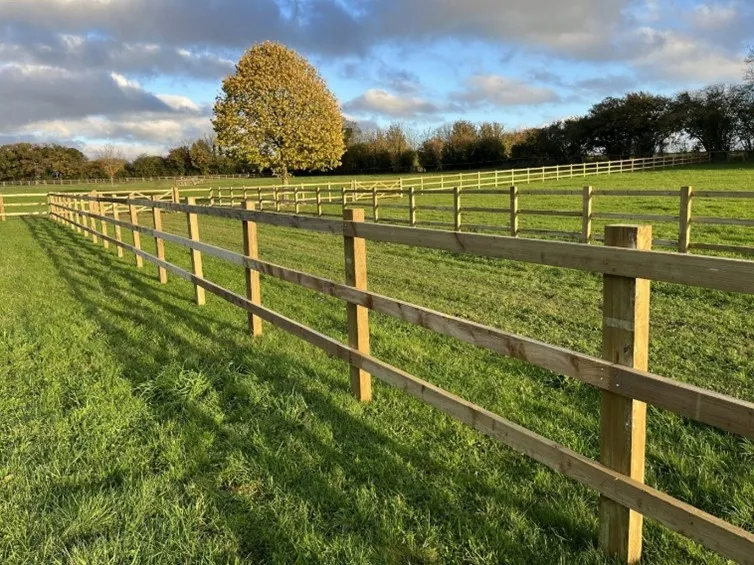
Your neighbour wants a new fence. Or your existing fence is falling over and you’d like them to contribute to replacing it. Or they’ve just replaced their side without talking to you and are now asking for half the money. Whatever the situation, you’ve probably looked up the Fencing Act 1978, found the actual legislation, and decided it’s written in a language you don’t speak.
You’re not alone. The Fencing Act is one of the most searched property law topics in New Zealand, and the official text is genuinely impenetrable for most people. This guide explains what you actually need to know — who pays, what the notice process involves, what “adequate” means in practice, and where the exceptions sit — without the legal language.
One important note before we start: this is practical information, not legal advice. For anything involving a formal dispute, a difficult neighbour, or a contested title, a lawyer or the Citizens Advice Bureau is the right next step.
What the Fencing Act 1978 actually says
The core principle of the Fencing Act is straightforward: neighbours are each generally liable for half the cost of an “adequate” dividing fence between their properties.
Neither party can be forced to build something elaborate. A neighbour can’t demand you split the cost of a premium Colorsteel privacy wall when a standard timber fence is the local norm. But equally, neither party can simply refuse to contribute to a basic, adequate fence if one is needed.
The Act applies to dividing fences between adjoining properties. It does not apply to fences on road boundaries — those are your responsibility alone. It also doesn’t apply between a property and a public reserve or council land in most circumstances.
What counts as an “adequate” fence?
This is where most disputes actually start, because “adequate” is not precisely defined in the Act. It’s a contextual standard based on what’s reasonable for the type of property and the neighbourhood.
In a typical Nelson residential suburb — Stoke, Richmond, Nelson central — an adequate fence is generally a standard treated timber paling fence at a height appropriate for the area. Not a premium material, not a decorative feature fence, not a boundary wall. A functional, weatherproof, reasonably attractive fence that’s normal for the street.
If your neighbour wants something more elaborate than what’s adequate — taller, more expensive material, a particular style — they can generally ask for it, but they’d typically pay the difference between the cost of an adequate fence and the cost of their preferred option.
If you want something more elaborate than your neighbour thinks is necessary, the same applies in reverse: you can build what you want, but you may only be able to recover half the cost of what would have been adequate.
How the Fencing Notice process works
The Fencing Act provides a formal process for situations where neighbours can’t agree informally. The starting point is a Fencing Notice.
Step 1: Serve the notice in writing. The notice must be a written document served on your neighbour. It needs to describe the boundary to be fenced, the type of fence you’re proposing, the estimated cost, and how you propose to share that cost (usually 50/50). Templates are available from the Citizens Advice Bureau and some council websites.
Step 2: Your neighbour has 21 days to respond. Within 21 days of receiving the notice, your neighbour can respond in one of two ways: they can agree, or they can serve a “cross-notice” objecting to some part of the proposal — the type of fence, the cost, the location of the boundary, or the cost-sharing arrangement.
Step 3: No response means deemed agreement. If your neighbour doesn’t respond within 21 days, they are legally deemed to have agreed to what you proposed. This is important: silence is agreement, not refusal.
Step 4: If they object. If a cross-notice is served, the parties need to try to resolve the disagreement. If they can’t, the dispute can go to the District Court. In practice, most disputes are resolved before reaching court — often through mediation or a straightforward conversation once both parties understand the legal position.
Step 5: Do the work and recover costs. Once the process is complete and there’s agreement (or deemed agreement), the fence can be built and costs recovered from the neighbour in accordance with what was agreed or determined.
What if your neighbour ignores the notice?
If the 21 days pass with no response, deemed agreement applies. You can proceed with the fence as described in the notice. If your neighbour then refuses to pay their share after the work is done, the Disputes Tribunal is the next step — it’s a relatively quick and inexpensive process for recovering costs under around $30,000, and fencing disputes are among the most common matters it handles.
Keep records throughout: save the notice you served, get confirmation of the date it was received (in-person service with a witness, or registered post), and keep your invoices and receipts for the work.
Cross-lease and body corporate properties — the exception to know
If your property is a cross-lease title — common in parts of Richmond, Stoke, and older Nelson suburbs — the Fencing Act may not apply in the same straightforward way. Cross-lease properties share an underlying title, and the rights and obligations around boundary structures can be governed by the cross-lease agreement rather than the Act alone.
Before serving a Fencing Notice on a cross-lease property, it’s worth checking your title and the cross-lease documents. Your neighbour may have a right to object on grounds that the Act doesn’t easily account for, or there may be a covenant requiring a specific type of fence.
Body corporate properties (apartments, units with a body corporate) have their own rules for shared structures. The body corporate rules, not the Fencing Act, will usually govern who pays for boundary fences.
If you’re not sure which category your property falls into, your title documents or Land Information New Zealand (LINZ) will confirm it.
Fencing covenants in newer subdivisions
Some newer subdivisions in areas like Richmond West, Marsden Valley, and other recent Nelson/Tasman developments have fencing covenants registered against the titles. These covenants can require each property owner to bear the full cost of their boundary fences — without any right to recover from their neighbours — for a set period, sometimes up to 12 years from the date of subdivision.
If you bought in a newer development and expected to split fencing costs with your neighbour, check your title for any registered covenants before serving a notice. This is one of those details that surprises a lot of homeowners.
When it’s easier to just sort it out directly
The Fencing Act is there as a backstop for when neighbours genuinely can’t agree. But most boundary fence situations in Nelson are resolved through a conversation.
If you and your neighbour both want a new fence and are broadly happy to split the cost, you don’t need a formal notice process. You agree on the fence type, you get quotes together, and you split the final invoice. Simple.
Where Kiwi Excavations can make this easier: we can quote the job in a way that’s clear and itemised enough for both parties to understand exactly what they’re paying for and why. A transparent, itemised quote removes most of the disagreement from the cost-sharing conversation.
If you’re at the stage of needing a fencing quote — whether to put in a Fencing Notice or simply to have a number to discuss with your neighbour — that’s a natural first step. Matt can assess the boundary, advise on what’s appropriate for the location, and give you a clear quote that both parties can work from.
Get in touch to book a free quote.
Frequently Asked Questions
Does the Fencing Act cover front boundary fences?
No. The Fencing Act 1978 applies to dividing fences between adjoining private properties. Your front boundary fence — the one between your property and the road — is your responsibility and yours alone. The Act doesn’t give you any right to recover costs from the council or the road controlling authority for a front fence.
What if my neighbour agrees verbally but then refuses to pay?
Verbal agreements are difficult to enforce. If you’re relying on a neighbour’s agreement to split costs, get it in writing — even an email exchange confirming the arrangement is better than nothing. If you’ve already built the fence and your neighbour is refusing to pay what they agreed to, the Disputes Tribunal is the most practical route for recovering the money.
Can I choose the style of fence without my neighbour’s input?
Under the Fencing Act, the fence being built should be “adequate” for the purpose. If you want a specific style that costs more than an adequate fence, you can choose it — but you’d normally pay the difference between the adequate cost and your preferred option. Your neighbour isn’t obligated to pay for an upgrade they didn’t agree to.
Does the Fencing Act apply if my neighbour is a landlord and the property is rented?
Yes. The obligation under the Act runs with the land, not the occupant. The landlord, as the property owner, is the party you’d serve a Fencing Notice on — not the tenant. In some cases, a body corporate or property manager may handle this on the landlord’s behalf, but the legal obligation sits with the owner.
What if we disagree about where the boundary actually is?
Boundary disputes are separate from fencing disputes, and they need to be resolved first. If you’re not sure where the legal boundary runs, a registered surveyor can establish it. Building a fence in the wrong location — even with the best intentions — can create significant legal problems. Get the boundary confirmed before the fence goes in.