Coastal Fencing in Nelson: What Actually Lasts Near the Sea
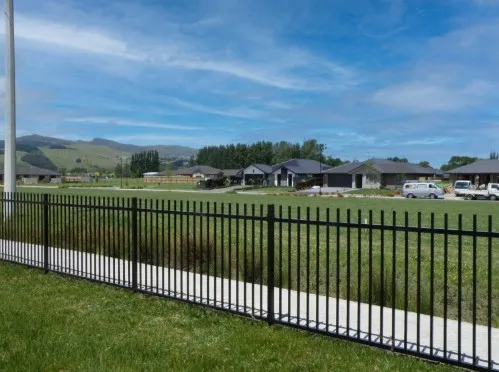
A fence that would give you 20 years on a section in central Nelson might give you seven in Tahunanui. Same materials, same installation, dramatically different outcome. The difference is salt air, and most fencing quotes don’t account for it.
If your property is within a kilometre or so of Tasman Bay, Monaco, the Mapua waterfront, or Ruby Bay, you’re in a corrosive environment that treats standard fencing materials differently from how they behave inland. This post covers what lasts in coastal Nelson, what to avoid, and why the fixing hardware matters as much as the fence material itself.
Why salt air is harder on fencing than most people expect
Salt air carries chloride ions: microscopic particles of salt suspended in coastal humidity. These ions are aggressive toward metals and penetrating to timber. The effect is cumulative and usually invisible until the damage is already significant.
In Nelson, coastal fencing should be assessed for salt-air exposure on any property:
- Within 500m of the sea or harbour
- Within 100m of tidal estuaries or sheltered inlets, which includes much of Mapua and the Monaco/Tahuna waterfront fringe
- On exposed sites affected by prevailing salt-laden winds. If salt deposits visibly on your windows or outdoor furniture, plan for coastal specifications
Distance from the sea matters, but aspect and prevailing wind direction matter too. A property 600m from the coast on an exposed north-west facing slope can sit in a higher-exposure environment than a sheltered property 300m away. If in doubt, treat it as coastal. The cost difference in materials is modest relative to the cost of replacing a fence that corrodes in five years.
Timber fencing near the coast: what treatment rating you need
Treated timber is rated by a hazard class system (H1 through H6) that specifies the preservative loading required for different exposure conditions. For fence posts in ground contact, H4 is the minimum rating for standard residential use. Coastal conditions don’t change that. H4 is still the correct ground-contact rating. What changes is how you treat the timber above ground.
H3.2 treated timber is adequate for above-ground exterior use in standard conditions. In high-exposure coastal areas it needs more frequent maintenance, restaining every three to four years rather than five to seven, because coastal humidity and salt cycling break down surface protection faster.
The stain or paint system matters as much as the timber. A penetrating oil-based stain holds up better in coastal conditions than a surface film finish, which can peel or blister as moisture moves in and out of the timber. If you’re staining a coastal fence, use a product designed for coastal or marine exterior timber rather than a standard exterior finish.
One detail specific to coastal timber: seal all cut ends. When timber is cut on site, the cut face exposes untreated wood beneath the surface treatment. In a coastal environment moisture penetrates cut ends rapidly. Sealing every cut end with a timber end-grain sealer is a small step that meaningfully extends post and rail life.
For the underground half of this equation, which matters just as much, see why your fence is only as good as what’s below the ground.
Aluminium fencing near the coast
For most coastal Nelson properties, powder-coated aluminium fencing is the sensible choice. It doesn’t rust, it doesn’t rot, it doesn’t need the maintenance cycle timber does, and it suits the contemporary architecture common in Tahunanui’s newer developments and along the Mapua waterfront. Current pricing by style is in our fencing pricing guide.
Two details separate a quality coastal aluminium installation from a cheap one.
Marine-grade powder coating. Standard powder coat performs well in standard conditions. In high-salt environments a marine-grade or premium powder coat is worth specifying, because the thicker, denser coating resists chloride penetration better. Ask your contractor what powder coating grade they’re specifying. If they don’t know the grade, that’s an answer in itself.
Fixings matched to the exposure. This is covered in detail below.
Fixings: the detail that usually isn’t in the quote
Fixings are one of the more important variables in a coastal fence, and the specification is almost never stated on a standard quote.
For standard fencing work we use galvanised fixings, which give good corrosion protection in normal Nelson conditions and are the right choice for the majority of properties.
For properties close to the sea, or in particularly corrosive coastal environments, stainless steel bolts or other suitably rated corrosion-resistant fixings can be used where appropriate. Which fixings get upgraded, and to what, depends on the fencing system and the specific application. A structural bolt carrying load in a directly exposed position is a different decision from a paling fixing on a sheltered side boundary, and it isn’t a case of swapping every nail on the job.
What this means practically: the exposure level of your particular property drives the specification, and that’s a conversation worth having before the quote is priced rather than after the fence is up. Ask what’s being specified for your site and why. A contractor who can explain the reasoning is telling you something useful about the job.
Galvanised steel and Colorsteel near the coast
Standard galvanised steel panel fencing corrodes faster in salt air than inland. The protective zinc coating is attacked by chloride ions, and once that layer is compromised, rust progresses quickly.
Colorsteel performs better than bare galvanised steel because of the factory-applied coating, but it still has limitations in coastal zones. For properties right on the Tahunanui foreshore or the Monaco waterfront, Colorsteel isn’t the first choice. For properties further back, 500m or more from direct coastal exposure, it performs adequately with periodic inspection and touch-up of any damaged coating.
If you’re considering Colorsteel for a coastal Nelson property, discuss the exposure level before committing. A property on a sheltered part of the Mapua estuary may be fine with it. A property facing directly into Tasman Bay is better served by aluminium.
Glass pool fencing and coastal conditions
Glass panels themselves are unaffected by salt air. The material is completely corrosion-resistant. The fittings are the issue.
Standard pool fence spigots and brackets are often supplied in standard stainless steel, or worse, zinc alloy. In coastal conditions these fittings can rust and stain the glass within a couple of years, leaving marks that are difficult to remove without damaging the glass or the fitting.
For glass pool fencing on a coastal Nelson property, marine-grade corrosion-resistant hardware is worth specifying, and it’s the first thing to ask a glazier about. The glass will last indefinitely. The hardware is the maintenance point. Compliance requirements for pool barriers are covered separately in our pool fencing guide.
Getting a coastal spec right is mostly about decisions made before the quote is priced, not after the fence is installed. If you’re on a coastal Nelson property, Matt can assess the actual exposure level for your address and specify materials and hardware to match it.
Frequently Asked Questions
How far from the sea does salt air affect fencing?
As a practical guide, properties within 500m of open coast or tidal water should plan for coastal material specifications. Properties between 500m and 1km are in a moderate zone where the right specification depends on aspect and prevailing wind direction. Properties further back are generally in standard conditions. In Nelson the prevailing north-west to south-west winds push salt air well inland on exposed aspects, so if your property regularly gets salt deposit on windows or outdoor furniture, coastal specifications are appropriate.
Does a painted timber fence last as long as a stained one in a coastal area?
No. Paint forms a surface film that can peel and blister as moisture moves in and out of the timber, which happens more frequently in coastal conditions. Once the paint film breaks, moisture gets underneath and the paint lifts further. A penetrating stain moves with the timber, doesn’t peel, and is significantly easier to maintain. For coastal timber fencing, a quality penetrating oil-based stain is the better long-term choice.
What is the lifespan of powder-coated aluminium near the sea?
With marine-grade powder coating and fixings specified for the exposure, a well-installed powder-coated aluminium fence should last a long time in coastal Nelson conditions with minimal maintenance. Occasional washing with fresh water to remove salt buildup is the main ongoing requirement. The variable that shortens it is a specification chosen for inland conditions and applied to a directly coastal site.
Can I repaint or re-coat my existing fence to extend its life?
For timber fences, restaining is straightforward and effective. Strip the old surface if it’s peeling, prepare the timber, and apply fresh stain. For powder-coated aluminium, re-coating is technically possible but not a simple DIY job, because it requires professional abrasive preparation and specialist coating. If the powder coat is significantly degraded, replacement panels are often more cost-effective than re-coating.
What’s the best low-maintenance fence for a Tahunanui property?
Powder-coated aluminium, with marine-grade coating and fixings matched to the site’s exposure. It needs the least maintenance of the standard residential options, and an occasional fresh-water rinse is all that’s required to prevent salt buildup. Glass is equally low-maintenance for the panels but needs more attention to hardware condition. Timber requires restaining every three to four years in direct coastal conditions, which is manageable but more effort than aluminium.